ISOMETRICS - THE SECRET TO MORE SPEED?
- Duncan Roman
- Oct 11, 2025
- 3 min read
Just because you're not moving doesn't mean we aren't improving speed
One of the most important parts of being a performance coach (or strength & conditioning coach) is assessing a sport and the individual athlete in front of us and determining the necessary components of their training plan.
We start by assessing the demands of the sport and its underlying bio-motor requirements. Some of the specific things we assess are the following:
Movement patterns
Speed and Agility requirements
Energy System Demand
Tactical Skills
So where do Isometrics come into play?
Let's take a 100m track athlete as a simple example:
Their primary movement patterns, speed, and energy system demands all revolve around Sprinting as a skill (which it is a skill). When we look at sprinting, there are multiple layers of what makes a good sprinter. The chart below shows a visual of what all feeds into a higher tier bio-motor ability (in the case of the chart, Agility)

The reality is the physical qualities we train serve as a foundation for expressing skill. The more an individual lacks in a given physical quality, the harder it becomes to express a skill at a higher level of performance.
Referencing the figure above, we can see that various strength and tissue qualities influence an athlete's ability to accelerate - someone who is weak and lacks stiffness in their tendons will ultimately not be able to generate as much propulsion when accelerating.
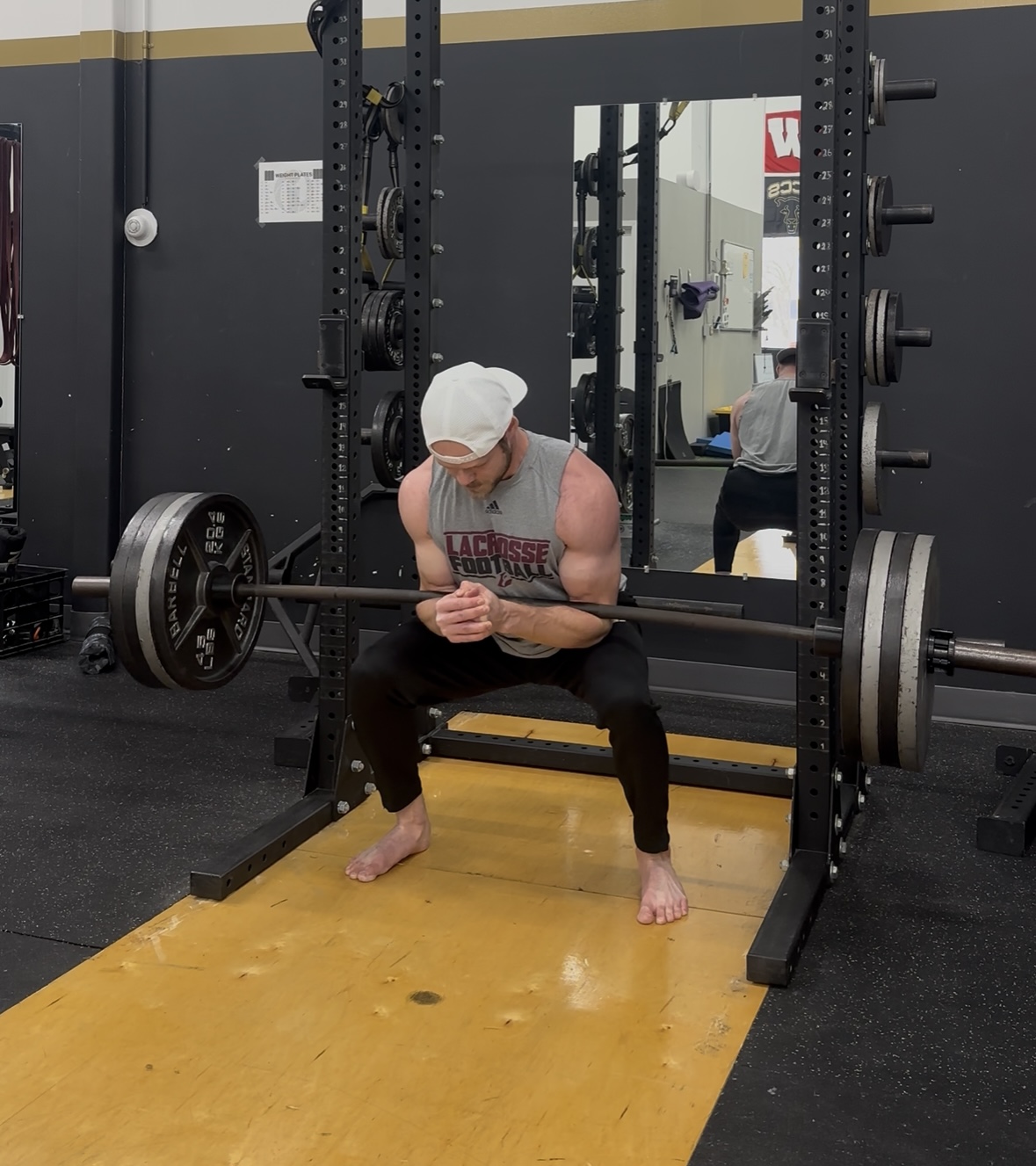
Tendon stiffness is where Isometrics can be particularly useful. Ongoing research for the last decade(s) has shown us that heavy/high intensity Isometric exercise specifically influences the tendons to improve stiffness and thickness. This is generally a desirable adaptation because it will improve the transfer of energy/force. A soft/weak Achilles tendon will limit the ability of the force generated by the hips and knees during sprinting to transfer into the ground.
A good example of this was a case I saw with regards to a high-level track athlete. Their performance coaches noticed specific drops on the athlete's muscle force readings during acceleration - indicating a potential weakness limiting acceleration. Further investigation led them to belief the Soleus, the muscle that sits behind your calf (gastrocnemius), was underdeveloped.
They performed specific testing on the Soleus, a seated calf Isometric push, to determine the Max Voluntary Contraction and found that it was significantly weaker than what was appropriate for that athlete
Enter Isometrics: Their protocol to correct this weak point was an Isometric calf protocol specifically to improve the strength of the Soleus at a given joint angle and the tendons stiffness.
For several weeks the athlete performed a seated calf raise Isometric pushes at about 90% of the MVC (max voluntary contraction) for 4-5 sets of 3 reps lasting 5-10s per rep.

The result? Soleus strength increased, Achilles tendon stiffness improved, and the athletes push off during acceleration was improved leading to a faster 10m split time indicating the protocol positively impacted acceleration ability.
This example shows us the difference between Elite level coaches and the rest.
The important thing to understand is that the training doesn't always directly reflect the outcome, calf raise ISOs, Lunge ISOs, these things at face value seem far away from sprinting and getting faster - yet they are important parts of building the required physical qualities needed to be fast.

Comments